Refrigerator and Cooling
Component Info
Your carbonated water system needs to be housed in a refrigerator to keep the water cold. Cold water carbonates better and provides refreshing cold sparkling water on demand.
Choosing a Refrigerator
Section titled “Choosing a Refrigerator”You can use:
- A dedicated mini-fridge (recommended for a dedicated setup)
- A section of your main refrigerator
- A portable refrigerator (great for events or temporary setups)
The system doesn’t require much space - a small mini-fridge works perfectly.
Compressor vs Thermoelectric Cooling
Section titled “Compressor vs Thermoelectric Cooling”You really want a fridge with a compressor, not electrical (thermoelectric/Peltier) cooling. Compressor-based refrigerators can reach and maintain lower temperatures needed for optimal carbonation (35-40°F), while thermoelectric coolers typically only cool 20-30°C below ambient temperature, which may not be sufficient.
Common RV/Camping Fridge Models
Section titled “Common RV/Camping Fridge Models”Many RV and camping refrigerators use compressor-based cooling and work well for this application. Popular options include:
- Dometic CFX Series: Portable compressor fridges available in various sizes (CFX3 25, CFX3 35, CFX3 45, etc.). Efficient, reliable, and can run on 12V DC or AC power.
- ICECO Portable Fridges: Compressor-based portable fridges (VL series, JP series) known for good performance and energy efficiency.
- Alpicool Portable Fridges: Budget-friendly compressor fridges with good cooling performance.
- Standard Mini-Fridges: Many standard home mini-fridges use compressor cooling and work perfectly for this setup. Look for models that can maintain temperatures around 35-40°F.
When selecting a fridge, prioritize compressor-based cooling and ensure it can maintain temperatures in the 35-40°F range for optimal carbonation.
Fridge Sizing
Section titled “Fridge Sizing”The size of refrigerator you need depends on your keg size and whether you want to store the CO₂ tank inside:
- Small kegs (1/2-2.5 gallons): A compact mini-fridge (1.7-3.2 cubic feet) typically works well. These smaller kegs fit easily and leave room for the CO₂ tank if you want it inside, plus space for tubing and the faucet.
- Medium kegs (3-5 gallons): A larger mini-fridge (3.5-5 cubic feet) provides more comfortable space. You’ll have room for the keg, CO₂ tank (if storing inside), and good air circulation.
- CO₂ tank placement: The CO₂ tank can be stored inside or outside the refrigerator. If storing outside, you can use a smaller fridge. If storing inside, account for the tank size (typically 5-10 inches in diameter and 12-18 inches tall for a 5lb tank).
General guidelines:
- Measure your keg dimensions and add 2-3 inches clearance on all sides for air circulation
- If storing CO₂ inside, add space for the tank plus clearance
- Ensure there’s room to route tubing and position the faucet/tap
- A 3-5 cubic foot mini-fridge is a good starting point for most setups
The system doesn’t require much space - even a small mini-fridge can work, especially with smaller kegs or external CO₂ tank storage.
Installation
Section titled “Installation”- Place the keg in the refrigerator, ensuring it’s stable and level.
- Route the water line and CO₂ lines into the refrigerator. See the Water Line Setup guide for detailed instructions on routing the water line and passing it through the refrigerator wall.
- Position the faucet/tap so it’s easily accessible.
- Ensure the CO₂ tank can be accessed for refills (it can be inside or outside the fridge).
Cooling Benefits
Section titled “Cooling Benefits”- Better Carbonation: Cold water absorbs CO₂ more efficiently
- Faster Carbonation: The system will carbonate faster when cold
- Refreshing Output: Cold sparkling water is more enjoyable
- Consistent Temperature: Maintains optimal carbonation conditions
Setup Photos
Section titled “Setup Photos”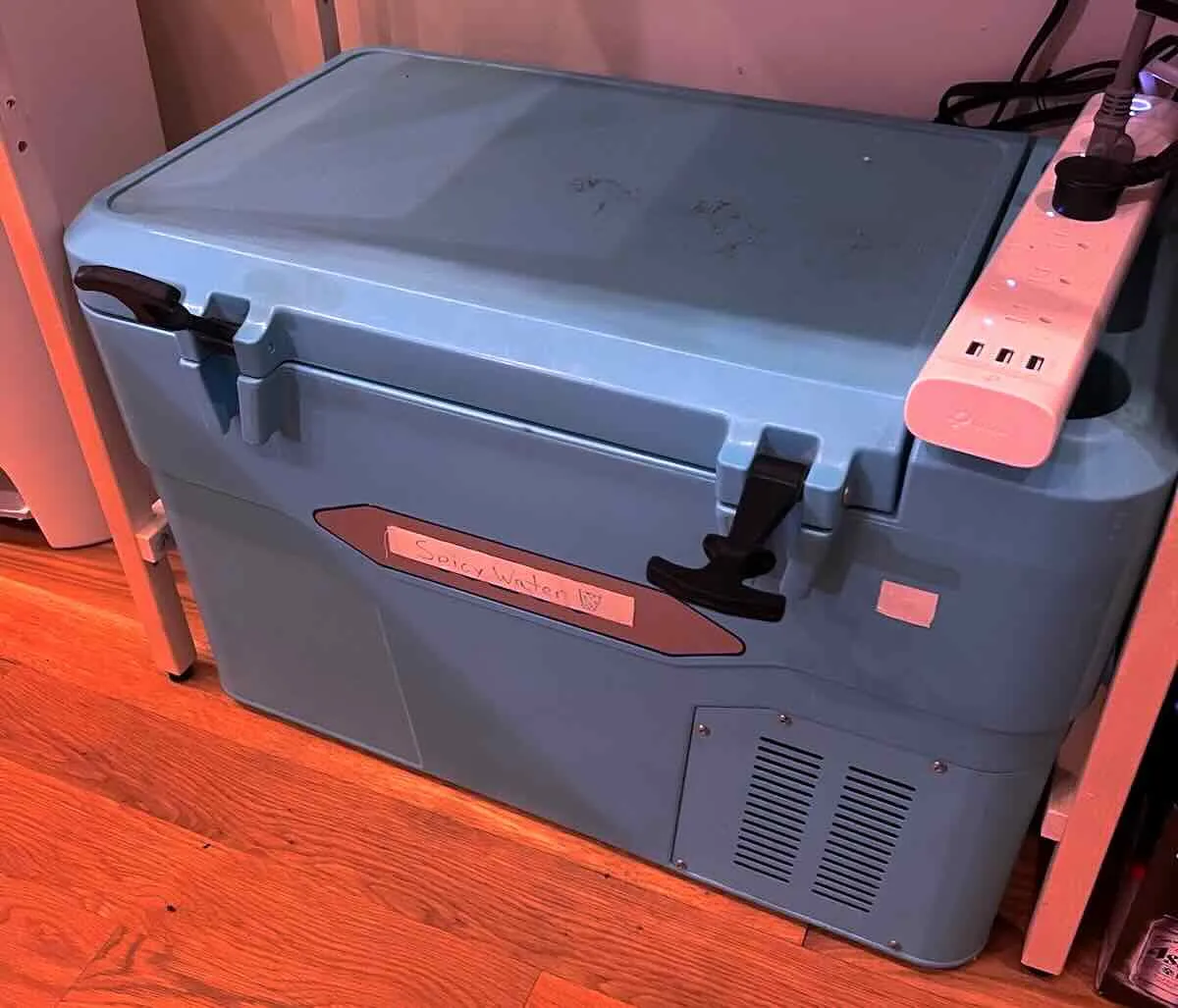
Sparkling Water Available on Tap
Section titled “Sparkling Water Available on Tap”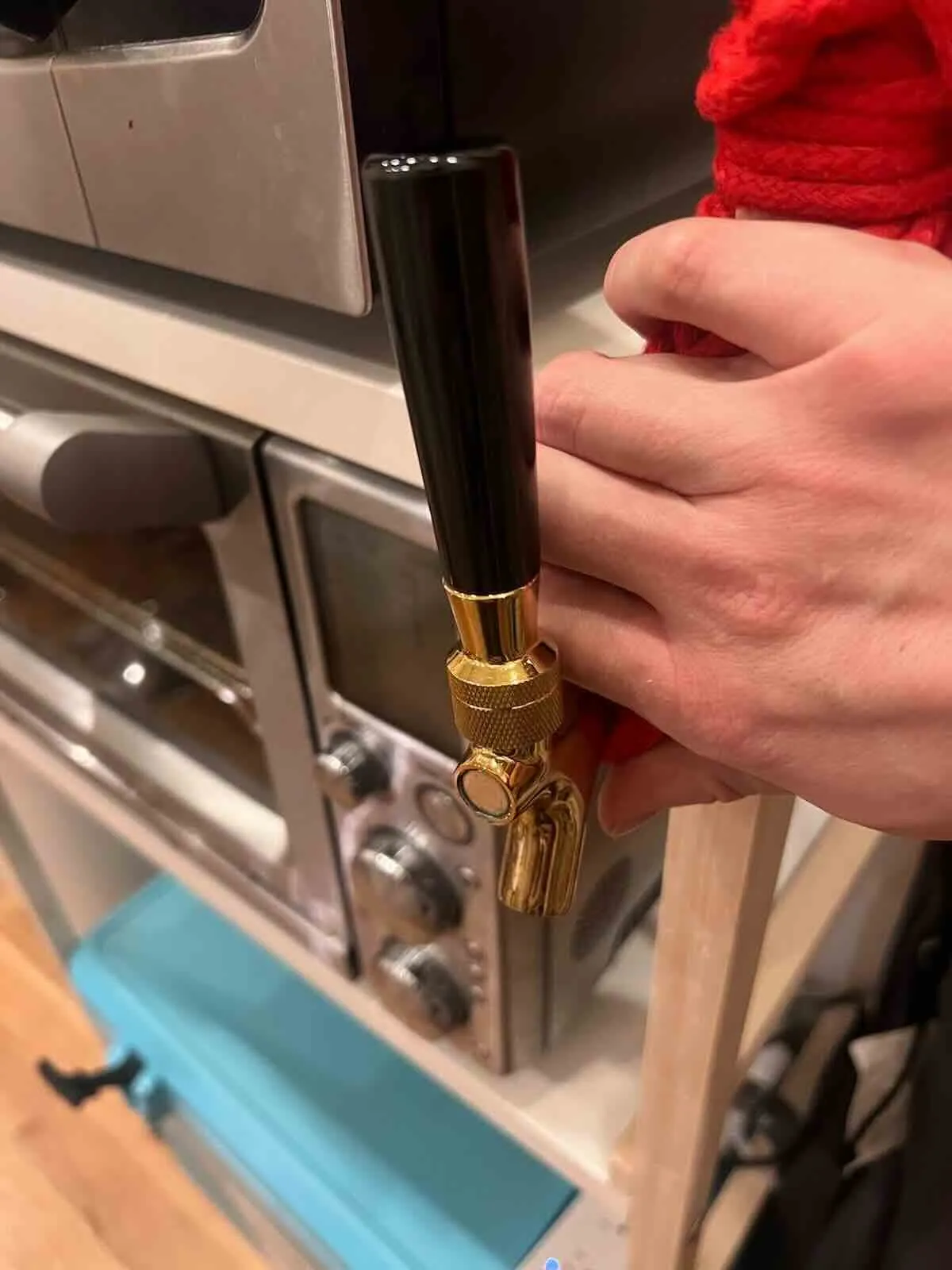
- Keep the refrigerator temperature around 35-40°F (2-4°C) for optimal carbonation
- Ensure good air circulation around the keg
- Consider a dedicated mini-fridge to provide flexiblity on where this can be located
- Condensation: The keg and system can sometimes accumulate condensation inside the refrigerator. Ensure your setup doesn’t mind getting a little damp on the bottom - this is normal and won’t affect the system’s operation
Next Steps
Section titled “Next Steps”Review Best Practices for maintenance and troubleshooting tips.